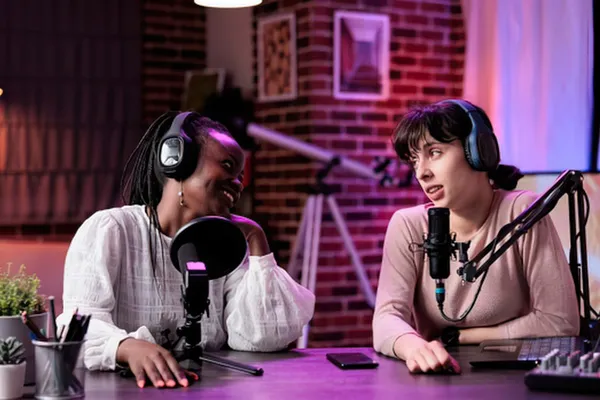
How to Make Your Podcast Feel Like a Real Conversation
The best podcasts don't sound like presentations, they sound like two people talking. Natural conversations make listeners relate and connect more. These are the conversations that can't be replaced with polished, scripted lines.
But how can we make this happen?
Hi there! I'm Paresa Noble, CEO and founder of Nobleer Media. I've been doing podcasts for a very long time. Through my podcasts, I've met so many amazing people, entrepreneurs, business owners, coaches, keynote speakers, and professionals. Many of them have become my clients too. In this blog, I'll be sharing my secret tips on how I make every episode of my podcast feel like a natural conversation. As you keep reading, grab a pen and paper so you can take some notes.
Talk to One Person, Not an Audience
When you're recording a podcast, think of someone you want to talk to. This could be a client, a friend, or anyone who comes to mind. Just one person, not everyone. Speaking to one imagined person naturally makes your delivery feel warmer and less like a broadcast.
I do this every time I sit down to record. Before I hit that record button, I picture one specific person, sometimes a past client, sometimes a friend who's going through exactly what I'm about to talk about. It sounds simple, but it changes everything about how I speak. My tone softens, my pacing feels more natural, and I stop worrying about sounding "professional" and start focusing on actually being helpful.
If you're recording for business owners and professionals in Denver or Parker, picture someone from your own community. Maybe it's a client who asked you a great question last week, or someone you met at a local networking event. When you speak to that one person in your mind, your audience will feel like you're speaking directly to them too. You can also learn more about making your podcast episodes more engaging for local listeners.
Let Your Script Guide You, Not Control You
Notes and outlines are helpful, but reading word-for-word creates a performance feel. Use bullet points or talking points instead of a full script so the conversation can breathe. Having a natural conversation doesn't mean we don't use scripts at all, we do. Scripts are good, and as I always say, use them as your guide, not your leash.
I still prepare before every episode, but my notes are simple. A few bullet points, maybe three or four key ideas I want to make sure I cover. That's it. This gives me enough structure to stay on track without locking me into reading sentences exactly as written. When I glance at my notes, I'm reminding myself what to talk about, not what to say word for word.
This small shift makes a big difference in how natural you sound. When you know your talking points but not your exact script, your brain naturally fills in the gaps the way it would in any real conversation, with your own words, your own pauses, and your own personality coming through.
Don't Be Afraid of Pauses or Imperfect Moments
When you're in the middle of a conversation and you suddenly pause for any reason, that's totally okay! Real conversations have natural pauses, laughs, and small stumbles. Trying to sound flawless is what makes an episode feel stiff. Embrace those small imperfections. They're part of what makes your voice authentic.
Early on in my podcasting journey, I used to stop recording every time I stumbled over a word or lost my train of thought. I thought I needed every sentence to be perfect. But the more I podcasted, the more I realized something: those little imperfect moments are often what make listeners feel like they're listening to a real person, not a performance. You can read more about this in our guide on simple podcast mistakes that can make listeners lose interest.
Think about the conversations you enjoy most in your own life. They're not perfectly scripted either. There are pauses while someone thinks, a laugh here and there, maybe even a moment where you circle back to finish a thought. That's what makes a conversation feel human, and that's exactly what your audience wants to feel when they listen to you.
Respond, Don't Just Recite
Whether you're recording solo or with a guest, react genuinely to what's being said instead of jumping straight to your next scripted point. This applies to interviews (really listening to your guest) and solo episodes (reacting to your own thoughts as they come). When there's something you want to share or emphasize, go for it, as long as you feel comfortable. Trust me, this really makes a difference in your podcast.
When I'm interviewing a guest, I make it a point to really listen, not just wait for my turn to ask the next question. If something they say surprises me or resonates with me, I'll pause and respond to it in the moment, even if it means going slightly off script. Those unplanned moments often turn into the most valuable parts of the episode. If you want more tips on hosting stronger guest conversations, check out our guide on common podcast interview mistakes hosts should avoid.
The same goes for solo episodes. If I'm talking through an idea and I think of a new example or a better way to explain something, I let myself follow that thought instead of forcing myself back to my notes right away. Your best insights don't always show up in your outline. Sometimes they show up while you're talking, and that's exactly where you want to let the conversation lead you.
So, those are the simple ways that can help you bring more heart into your podcast. Write down the tips I shared with you today, they'll become your guide on your journey to podcast success. A podcast that feels like a natural conversation is what builds real trust and connection with your audience. Conversational episodes are what keep Denver and Parker listeners coming back, episode after episode.
If you need support creating podcast episodes that feel natural, engaging, and true to your voice, learn more about our podcast production services.


